
This is a vinyl rip that I ripped myself, I've gone through and cleaned up most of the really noticeable pops but there are still a few artifacts as you would expect.
MP3 192 VBR
Download

The Best of Cannon’s Jug Stompers
Biographical information from the now defunct collective blog Music A-K-O
Translated from Spanish by yours truly.
Gus Cannon was born on September 12th 1883 on the plantation of Henderson Newell in Marshall Country, Mississippi. His father had been a slave and Gus was the youngest of ten children. In 1895 Gus went with his brother Tom to Clarksdale to work in cotton fields. At that time Gus started to become interested in music. He built a banjo out of the neck of a guitar and a kind of pot used to bake bread. Gus began to pick up on the songs of the people of Clarksdale and he was taught some musical techniques by a musician named Bud Jackson. Gus got his first real bajno from his brother who he beat in a game of dice.
They say that jug bands started at the beginning of the century in Louisville, Kentucky, and that they played a mix of early jazz, country, and songs with ragtime roots. By 1910 Gus Cannon had gone to work at a plantation near Ashport, Tennessee, where he formed his first jug band with Jim Turner. Jug bands were very popular at the time and usually consisted of a jug, violin, banjo, and sometimes a guitar or mandolin.
In 1928 Ralph Peer of Victor, which had recorded other popular jug bands in Memphis, went looking for other bands to record. Charlie Williamson, a man who at that time owned the Palace Theatre told him that he knew a guy named Gus Cannon who played in one. By that time Gus had attached the jug to the neck of his banjo and was able to play both at the same time. Gus called up a harmonica player named Noah Lewis who was known for being able to play two harmonicas at the same time. Gus had met him in 1907 when he worked at the Ashport plantation near Ripley, Tennessee. He also called Ashley Thompson and the three of them formed Cannon’s Jug Stompers. Later they would add more people like John Estes on guitar, Yank Rachel on mandolin, and various unknown musicians who would sit in from session to session. Gus’ band recorded a total of 26 sides between the 30th of January 1928 and the 28th of November 1930. You’ve got to hear this smokin’ hot music that just makes you want to live, soak up the sun, and smile. Listen to Going to Germany and you’ll see what I mean.
Image: Gus Cannon in 1963, via Memphis Music Stars


How To Speak Hip
01 Introduction
02 Basic Hip
03 Vocabulary Building
04 The Loose Wig
05 The Riff
06 The Hang Up
07 Put On, Put Down, Come On, Come Down, Bring Down
08 Cool
09 Uncool
10 Field Trip No. 1
11 Field Trip No. 2
12 Field Trip No. 3
13 Summary
The Do It Yourself Psychoanalysis Kit
14 General Introduction To Psychoanalysis
15 Psychological Testing
16 Diagnosis and Therapy
17 The Psychoanalytic Session
18 The Diagnosis of Dr Siegfried Gesalt
This is a 2009 CD reissue of the classic 1959 comedy record How To Speak Hip. It’s really a gas. I couldn’t post this without giving credit to Owl who posted his record rip at Holy Warbles. This reissue includes another of Close’s comedy records The Do It Yourself Psychoanalysis Kit (released the same year on Hanover) which is hilarious in and of itself.
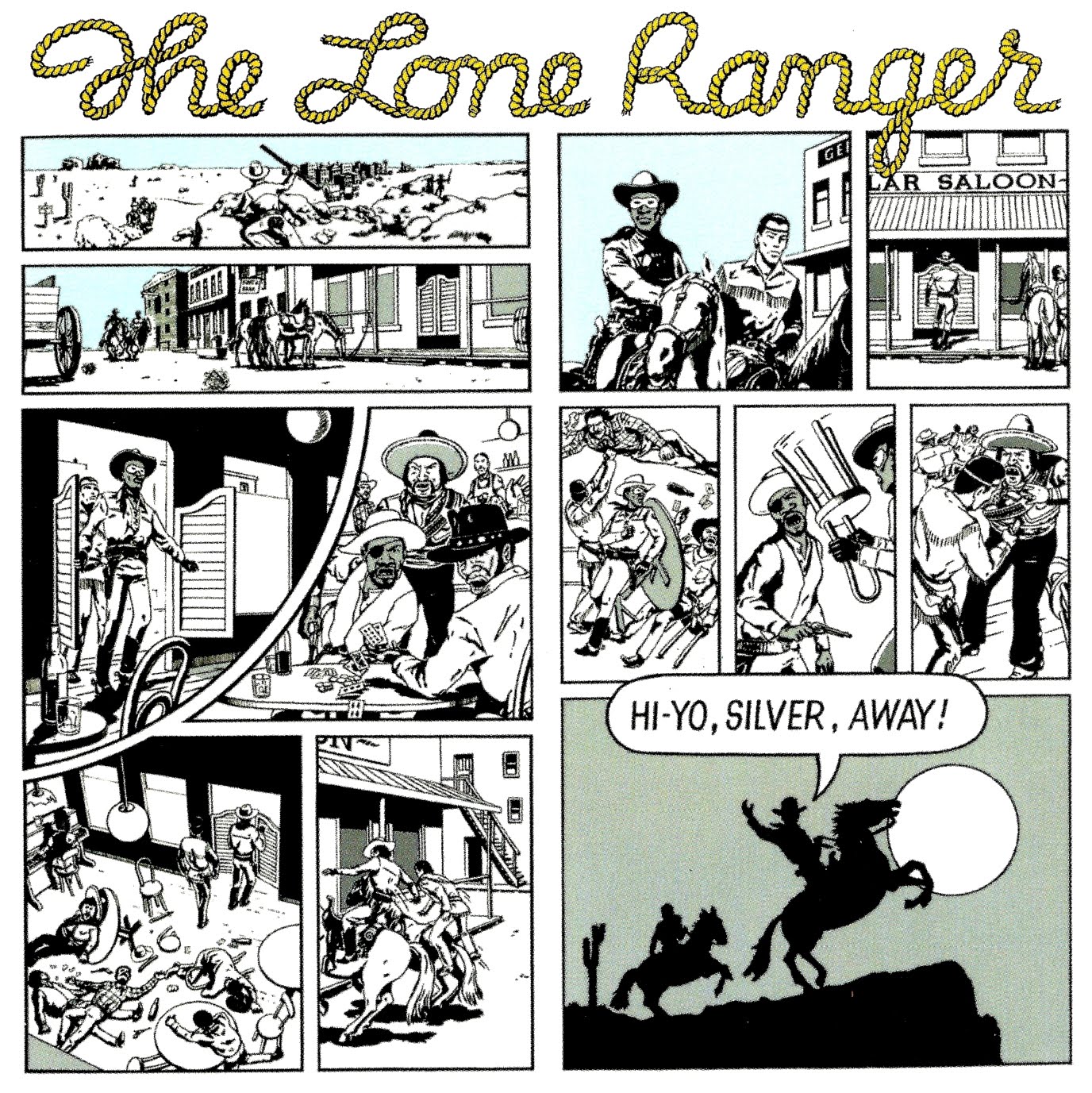
Lone Ranger (born Anthony Alphanso Waldron) is a Jamaican reggae deejay who recorded nine albums between the late 1970s and mid-1980s. This is his 1982 album Hi-Yo, Silver, Away!
Waldron spent much of his youth in the United Kingdom and began his recording career with Clement “Coxsone” Dodd’s Studio One label. He initially worked as a duo with Welton Irie, but soon began recording solo, having a big hit in Jamaica with “Love Bump”. He also worked on the Virgo Sound sound system. He had a number one UK reggae chart album in 1980 with Barnabus Collins. He is regarded as one of the most lyrically inventive deejays of his era, and was a major influence on British deejays of the early 1980s. He relocated to the United States in the mid-1980s, but returned to Jamaica in 1998, and began performing on sound systems once again.
Hi-Yo, Silver, Away!
01. Tom DrunkMy personal favorites are track #5 and #7.

I found this record at Ed McKays Used Books And More which is where I usually spend my weekends now. It was made by an extremely obscure Los Angeles label called Olympic Records who started The Atlas Series in 1977 that featured music from all over the world. I presume the music was stolen from foreign labels that had no valid copyright in the United States. That was a common practice in the 70’s. They got lazy and left most of what was written on the record in French! I also have a Sitar album from the label if anyone wants me to upload it. The back of the record gives a brief history of the Pan Flute and similar instruments dating back to 618-900 AD. It was incredibly informative and interesting though it had little to do with the actual songs on the disc. It was also the only text translated from the original French.
Personnel
Georges Schmitt – Pan Flute
Albert Levy – Organ and Piano
Roland Dyens and Jean-Pierre Semerraro – Guitar
Jean-Luc Ceddaha – Percussion
Songs:
01 Folkloriana
02 Suite Bretonne
03 Aurore
04 Enfantines
05 A Mezzu Mare
06 Les Gardians
07 Si Re Do
08 Triste Est Le Ciel Folklore des Pyrénées
09 Suite Pyreneenne Los Caulets - Anem Petitons
10 La Danse de Biquette
11 Tambours de Guerre
12 Pastourelle

 "In his ‘photosonic’ process, Dudon shines light through a series of semi-transparent, rotating discs that slow and modify the light waves’ frequencies; the resulting waveforms are picked up by photoelectric (solar-power) cells connected to standard analog amplifiers."
 ost accomplished bandoneón player to date. He plays the instrument in such a way that sends shivers down your spine with each note. Anja Lechner being an extravagant concert cellist accompanies these mesmerising performances perfectly. The two play together as if they have synchronised minds and are able to mirror or combat every contribution given to the piece.
 This recording features remarkable unaccompanied piano unlike the work of any other composer to date. Glass wrote the first five arrangements as an ode to Kafka's The Metamorphosis. The other two tracks are Mad Rush and Wichita Sutra Vortex the first of which was written in 1981 for the Dalai Lama's first public address in New York City the latter being a collaboration with the poet Allen Ginsberg, a long time friend of Glass.
 This is an excellent collection of some of the most bizarre instruments ever recorded. The CD originally included a book describing each song that I would love to get my hands on. There is even an introduction by none other than Tom Waits! Anyway, it's an excellent album with a very wide variety of musical styles. Most of the songs are well written and are a real joy to listen to. I highly recommend it to anyone, if not for enjoyment, for curiosity.
  This astounding version of Cage's famous pieces for prepared piano is conducted by Wake Forest University professor Louis Goldstein. There is also a rendition of Dream, a piece composed by Cage in 1948.

